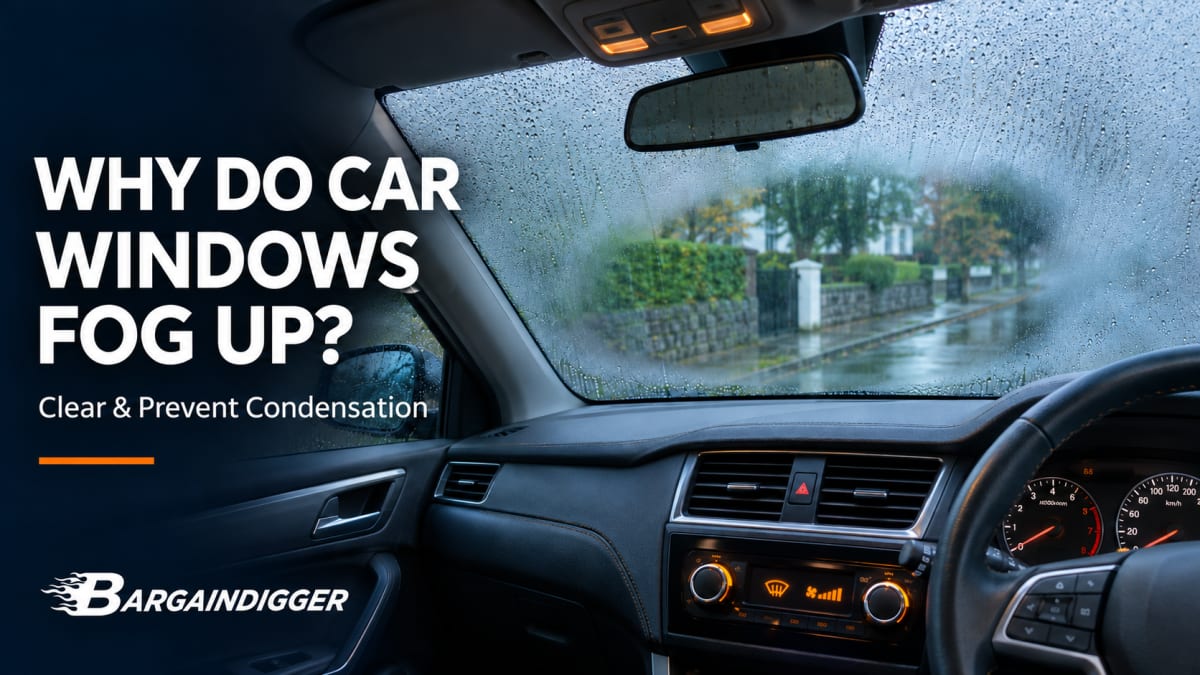
Find out what causes condensation inside your car, how to clear foggy windows quickly and how to prevent moisture from returning.
Foggy windows are a familiar problem for drivers in Ireland, especially on cold, wet mornings. You clear the windscreen, get into the car, and within moments the glass starts misting up again.
Condensation inside a car happens when moist air meets cold glass. Your breathing, wet clothes and damp floor mats all add moisture to the cabin. When that moisture reaches a cold window, it forms tiny droplets that reduce visibility.
Occasional misting is normal. However, windows that are constantly wet inside can indicate trapped moisture, poor ventilation or a water leak.
What Causes Condensation Inside a Car?
Wet Clothes, Umbrellas and Floor Mats
Rainwater enters the cabin on shoes, jackets, umbrellas and even the family dog. As these items dry, moisture enters the air and can condense on the windows.
Leaving wet items in a parked car allows the problem to continue overnight.
Your Breathing and Passengers
Everyone inside the car releases moisture through breathing. With several passengers on board, windows can mist up quickly, particularly when the glass is cold and ventilation is low.
Using Air Recirculation for Too Long
Recirculation keeps cabin air moving around the vehicle instead of bringing in fresh air. During damp weather, this can allow moisture to build up.
Renault’s owner guidance identifies recirculation, low ventilation and switching off the air conditioning as conditions that can contribute to window condensation.
Water Leaks and Damp Carpets
Persistent condensation may come from water entering through damaged seals, blocked drainage channels or another leak.
Check beneath the floor mats and in the boot, including the spare-wheel well where fitted. The top of a carpet may feel dry while the material underneath remains wet.
How to Clear Foggy Car Windows
Clear the windscreen, side windows and mirrors before driving. If visibility deteriorates while you are moving, pull over safely before adjusting the controls.
For most cars, use the following steps:
- Select the windscreen demist setting. If your car has a dedicated maximum-demist button, use it.
- Increase the fan speed and select warm air. Direct the airflow towards the windscreen and front side windows.
- Switch on the air conditioning. It can dry the air while the heater warms it.
- Turn off recirculation. Select fresh-air ventilation.
- Switch on the heated rear window and heated mirrors, if fitted.
- Keep ventilation running after the glass clears to help prevent mist from returning.
These settings follow the general approach recommended by RAC: airflow towards the glass, heating and air conditioning to remove moisture. Follow your vehicle’s handbook for its specific controls; air-conditioning operation may be limited in very cold conditions.
If necessary, briefly opening a side window can help release humid cabin air. A clean microfibre cloth can remove remaining moisture while you are parked, but wiping alone will not resolve the cause.
How to Prevent Condensation Inside Your Car
Remove Wet Items After Every Journey
Take damp coats, umbrellas and sports gear indoors. Avoid leaving wet towels or cleaning cloths in the boot.
Remove wet floor mats and allow them to dry fully before putting them back.
Keep the Inside of the Windows Clean
Fingerprints, dust and interior residue can leave the glass smeared and make mist harder to clear cleanly.
Use an automotive glass cleaner and a clean microfibre cloth. Choose a product suitable for any window tint, and avoid wiping the windscreen with your hands.
Use Fresh-Air Ventilation
During damp weather, avoid leaving recirculation switched on continuously. Maintain enough airflow to stop moisture building up, especially when carrying several passengers.
Check Carpets and the Boot for Dampness
If condensation returns every morning, look for a continuing source of water.
Check:
- Under the front and rear floor mats.
- Around door and boot seals.
- Beneath the boot floor.
- Around the spare-wheel well, where fitted.
- For damp patches near the windscreen or roof lining.
Drying the cabin helps, but any leak must also be repaired.
Maintain the Ventilation System
If the airflow seems unusually weak, have the cabin filter and ventilation system checked. Replace the filter according to the vehicle’s service schedule.
A moisture absorber designed for cars can help with residual dampness, but it cannot repair a leak or replace effective ventilation. Secure it so it cannot move near the pedals.
When Should You Have the Car Checked?
Arrange an inspection if you notice:
- Water pooling inside the cabin.
- Carpets that remain wet.
- A persistent musty smell.
- Very weak airflow from the vents.
- Windows that repeatedly mist up despite using the correct demist settings.
A sweet smell, greasy film on the windscreen or unexplained coolant loss also needs investigation, as it may indicate a heating-system leak.
Check for Dampness When Buying a Used Car
When viewing a used vehicle, do more than inspect the paintwork and seats. Check beneath the mats, smell the interior and test the heating, air conditioning and demister.
Heavy condensation does not automatically mean the car has a serious fault, but unexplained dampness deserves attention before you buy.
Read our used-car inspection checklist for more checks to make during a viewing.
Frequently Asked Questions
Why is my windscreen wet on the inside every morning?
Moisture may be trapped inside the cabin and condensing as the glass cools overnight. Start by checking wet mats, clothing, carpets and the boot for dampness.
Should I use hot or cold air to demist the windows?
Use the vehicle’s demist setting. Warm airflow helps warm the glass, while air conditioning removes moisture when operating. Keep recirculation off.
Does air conditioning help in winter?
Yes. Air conditioning can help dry cabin air even when you select a warm temperature. Some vehicles restrict its operation at low outside temperatures.
Is condensation inside a car always a sign of a leak?
No. Breathing, wet shoes and damp clothing can cause normal condensation. Persistent heavy moisture, wet carpets or standing water should be investigated.
Will a car moisture absorber solve the problem?
It may reduce residual moisture, but it will not fix water entering the vehicle. Remove wet items, maintain ventilation and repair any leaks.
Keep Your Windows Clear Before Every Journey
The best way to manage condensation inside your car is to remove excess moisture, use the demister correctly and investigate persistent dampness.
Looking for your next vehicle? Browse used cars for sale in Ireland on Bargaindigger and check the ventilation and interior condition when arranging a viewing.